
Carb cravings are not a character flaw.
If you feel like you “lose control” around bread, pasta, cookies, chips, or even so-called healthy granola, you are not weak. You are feeling a very normal mix of biology, habit, and emotion. If you have been trying to stop carb cravings and it keeps feeling harder than it should, there is a real reason for that.
Your body is wired to like quick energy. Refined carbs give you that. They break down fast, send your blood sugar up, and your brain gets a brief hit of “ahhh, that feels better.” When that sugar rush drops, you feel tired, foggy, or moody, and your brain remembers what fixed it last time. More carbs.
On top of that, you may have years of using food to cope with stress, boredom, or loneliness. If you grew up being soothed with treats, or you had a long season of dieting and “being good,” your brain has learned a simple loop. Feel bad, reach for carbs, feel better for a moment, repeat.

So how do you actually stop carb cravings, without living on willpower alone?
You start by working with your body instead of fighting it. That means:
- Steadying your blood sugar with meals that include protein, healthy fats, and fiber, not just quick starch.
- Not letting yourself get “over”-hungry, since long gaps between meals often trigger the strongest carb urges.
- Noticing your emotional triggers, like the nightly “I deserve this” snack, and learning other ways to decompress.
- Cleaning up the food environment so the highest-sugar, easiest options are not always within reach.
You do not need a perfect keto day or a strict plan to make progress. Simple shifts you repeat often can reduce cravings to a manageable level.
This guide will walk you through what is happening in your body when cravings hit, how stress and hormones layer on top of that, and where hidden carbs keep you stuck. Then we will move into realistic strategies you can start today. If you want extra help with emotional eating patterns, you can read more about them here: emotional eating and cravings.
Key takeaway: You are not failing. Your biology and habits are doing exactly what they were trained to do. Once you understand that, you can change the pattern, step by step.
What’s Really Happening in Your Body When You Try to Stop Carb Cravings
1. Blood Sugar Spikes, Crashes, and “I Need Something Now”
When you eat refined carbs, like white bread, pastries, sweet coffee drinks, or many snack foods, they break down quickly into sugar. Your blood sugar rises fast, your body releases insulin to move that sugar out of your blood, and then it can drop just as fast. This is one of the main reasons it can feel so hard to stop carb cravings, even when you are trying to eat better.
That drop is when you feel tired, shaky, unfocused, or strangely “empty.” Your brain reads this as an emergency and pushes you toward the fastest fix it knows, more quick carbs. This is not weak willpower. It is your body trying to correct a problem it thinks is urgent.
If most meals and snacks are heavy on refined starch and light on protein, healthy fats, and fiber, you stay stuck in this spike and crash loop. The more often it happens, the more “normal” those carb cravings feel.
2. Dopamine, the “That Felt Good, Do It Again” Signal
Carbs, especially sugar, light up your brain's reward system. You get a hit of dopamine, the “that felt good” chemical. Your brain takes notes. It links that nice feeling to the food you just ate and to the situation you were in.
So next time you feel bored, stressed, or lonely, your brain offers a shortcut. Eat that same thing, and you will feel better for a moment. Over time, this becomes a habit loop.
- Triggers, such as stress or tiredness.
- Behavior: reach for carbs.
- Reward, brief relief, or comfort.
You are not imagining it. Carb foods really can feel soothing in the moment. The problem is what comes after: the crash, the guilt, and the stronger pull to repeat it.
3. Hormones, Stress, and the 30 to 65 Season of Life
For many women between 30 and 65, hormones shift. Estrogen and progesterone fluctuate, which can change your body's sensitivity to insulin and affect mood, sleep, and appetite. Around certain times of the month, or in perimenopause, carb cravings often feel louder and less “optional.”
Stress adds another layer. When stress hormones remain high, your body seeks quick energy and comfort. That often means sugar and refined carbs. If you are trying to manage weight, blood pressure, or insulin resistance, this can feel like your body is working against you.
4. Emotional Eating and Learned Carb Patterns
If you have used food to cope for years, your brain has very strong pathways that tie feelings to carbs. You might reach for something sweet when you feel lonely, or crunchy snacks when you feel angry or anxious.
This pattern did not come out of nowhere. Many people learned it in childhood, where treats were used as comfort, reward, or distraction. Those early patterns can show up again any time life feels heavy.
If you want to go deeper into these patterns, you can explore emotional triggers in more detail here and identify your emotional triggers that lead to cravings.
Key takeaway: Your carb cravings come from three places working together: blood sugar swings, brain reward wiring, and emotional habits shaped by hormones and stress. Once you see these clearly, you can start changing them piece by piece instead of blaming yourself.
Spotting Hidden Carbs and Everyday Food Traps
You can be “doing everything right” and still feel stuck with cravings if hidden carbs keep nudging your blood sugar up and down all day. These are the foods that look harmless, or even healthy, but quietly feed the cycle, making it harder to stop carb cravings.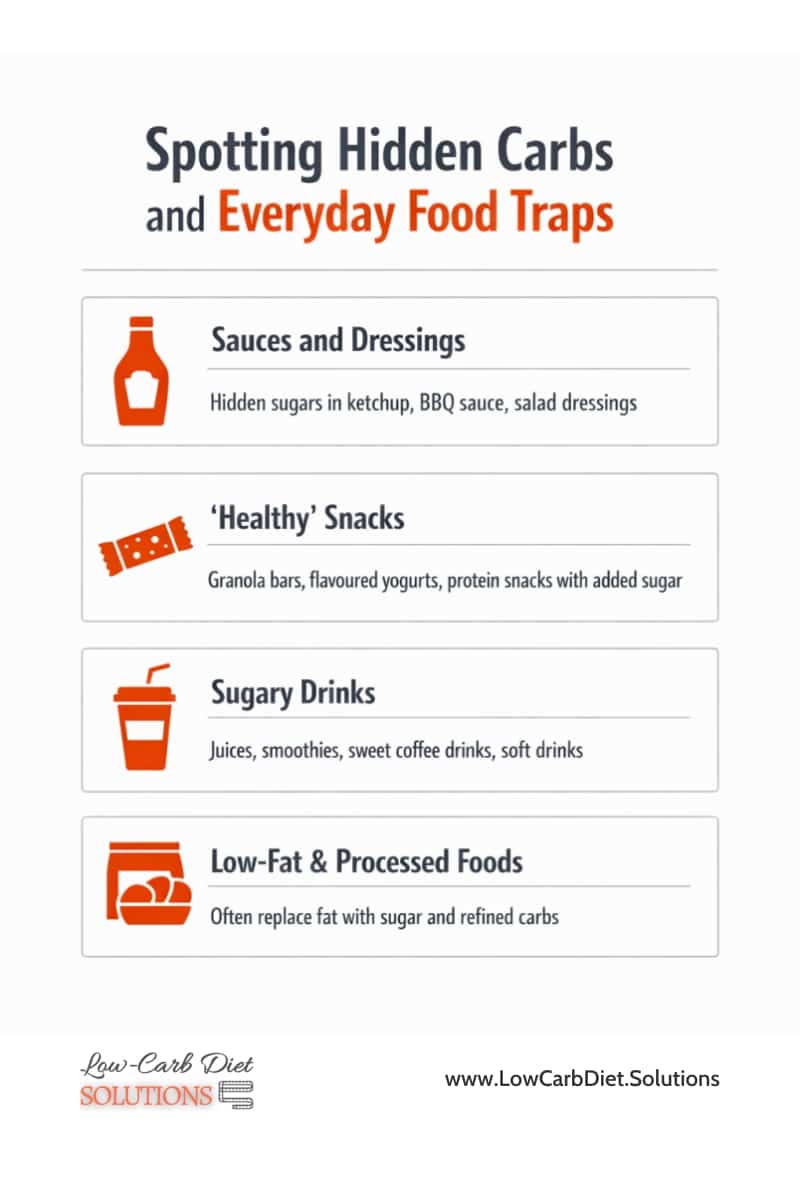
1. Sauces, Dressings, and Condiments
Many sauces and condiments are basically liquid sugar. You taste the salt or spice, not the sweetness, so they fly under the radar.
- Bottled salad dressings and “light” dressings
- Barbecue, teriyaki, and “glaze” style sauces
- Ketchup and many “secret” house sauces
Simple fix: Use oil and vinegar, creamy dressings made with real mayo or yogurt, or check labels and pick the option with the fewest total carbs per serving. If you want more ideas, explore basic low-carb meals and recipes, such as the options in these keto and low-carb recipes.
2. “Healthy” Snack Foods
Snack foods marketed as natural, whole-grain, or high-fiber can still spike your blood sugar.
- Granola and granola bars
- Veggie chips and multigrain crackers
- Protein bars with a long ingredient list
If you notice you are hungrier or more snacky after eating them, that is a sign they are acting like refined carbs in your body.
3. Drinks That Act Like Dessert
Drinks are one of the fastest ways to trigger cravings, because the sugar hits your system quickly.
- Flavored coffee drinks and sweetened creamers
- Bottled teas, energy drinks, and juices
- “Zero sugar” drinks with artificial sweeteners that keep your sweet tooth loud
If you are curious about how sugar and sweeteners affect mood and cravings, you can read more in the sugar and mood section of these sugar and health articles.
4. Processed Foods Labeled “Low Sugar” or “Lite”
Packages that say low sugar, lite, or reduced fat often make up for flavor with starches or sweeteners. That can mean more cravings later, even if the sugar grams look low.
- Flavored yogurts
- Low-fat frozen meals
- Breads and wraps labeled as “smart” or “fit.”
Key takeaway: You do not need to obsess over every gram, but it helps to spot the repeat offenders. Start by checking sauces, snacks, drinks, and “healthy” processed foods. Small changes in these areas can calm your blood sugar and make the louder carb cravings fade without needing a perfect diet.
Practical, Realistic Strategies to Curb Carb Cravings Now
1. Build a “Craving Calming” Plate
The fastest way to quiet carb cravings is to steady your blood sugar. That starts with how you build your meals.
Use this simple framework for most meals:
- Protein, such as meat, eggs, fish, or a dairy option.
- Healthy fats, such as olive oil, avocado, butter, nuts, or cheese.
- Fiber-rich low-carb vegetables, such as leafy greens, broccoli, cauliflower, or zucchini.
When you combine protein, fat, and fiber, your blood sugar rises more gently and stays stable longer. You feel full and satisfied, which makes that “I need bread right now” voice much quieter. If you want help choosing better fats, you can explore them in this healthy fats guide.
2. Use Simple Swaps Instead of Strict Rules
You do not need to overhaul everything. Start with the carbs that trigger you most.
- Swap breakfast pastries for eggs or a low-carb breakfast sandwich.
- Trade chips and crackers for nuts, cheese, or cut veggies with a rich dip.
- Replace nightly ice cream with a small portion of a low-carb dessert, such as the berry cobbler in this low-carb cobbler recipe.
Key idea: keep the comfort and pleasure, change the fuel. Your brain still gets something satisfying, but your body is not whipped through that spike-and-crash cycle.
3. Eat Regularly Enough To Avoid “Emergency Hungry”
Going too long without food is one of the strongest triggers for carb cravings. When you are overhungry, your brain cares about fast, not smart.
- Aim for meals spaced in a predictable pattern that fits your day.
- Include enough protein and fat so you can comfortably make it to the next meal.
- Keep a simple low-carb snack on hand for days that run long.
You can be “doing everything right” and still feel stuck with cravings if hidden carbs keep nudging your blood sugar up and down all day. These are the foods that look harmless, or even healthy, but quietly feed the cycle, making it harder to stop carb cravings.
4. Hydrate Before You Graze
Mild dehydration often feels like low energy or “I need something.” Before you grab carbs, drink a glass of water or an unsweetened drink, then pause for a few minutes.
If the craving eases a bit, it was partly thirst. If it is still strong, you can decide whether you need food, rest, or emotional comfort.
5. Pause and Check for Emotional Triggers
Not every craving is physical. Many are emotional habits.
When a craving hits, ask yourself:
- Where do I feel this, in my body or mostly in my head and chest.
- What just happened: a stressful email, a fight, boredom, loneliness.
- What else could help: a short walk, a shower, a short stretch, or texting a friend.
If you realize that your craving is mostly emotional, you have already created a gap in the habit loop. You can learn more tools in the article on overcoming emotional eating.
6. Use Small, Daily Stress Releases
High stress keeps cravings loud. You do not need an hour of meditation. A few short practices repeated most days can help.
- Slow breathing for a few cycles before you eat.
- Five minutes of light stretching or walking after work.
- Turning off screens for a short time before bed.
Key takeaway: You calm cravings from both directions. You steady your body with balanced, regular meals and hydration. You steady your body with balanced, regular meals and adequate hydration, and support your mind with simple pauses and stress-relief techniques to help curb carb cravings. Done consistently, these small steps make carb cravings less intense and far more manageable.
Building Consistency Over Perfection: Habits That Help Long Term
White-knuckling your way through a “perfect” day almost always backfires. What actually quiets carb cravings long term is gentle, steady habits that you can repeat in real life, not just ideal ones.

Trade All Or Nothing For “Most Of The Time”
All-or-nothing thinking sounds like “I blew it at lunch, so today is ruined.” That mindset keeps carb cravings strong, because one slip often turns into a full spiral.
Instead, aim for “most of the time.” If breakfast and lunch are low carb and balanced, and dinner is less ideal, you are still moving your average in the right direction. Your blood sugar and your cravings care about the overall pattern, not one single meal.
If you like structure, you may find simple tools like a journal or checklist helpful. A resource, such as a daily low-carb checklist, can give you a basic framework without pushing perfection.
Shape Your Environment So You Need Less Willpower
It is much easier to be consistent when your surroundings match your goals.
- Keep trigger foods out of daily reach, or buy them less often.
- Stock quick, low-carb options, like eggs, cheese, nuts, or prewashed greens.
- Batch cook one or two simple meals on calm days, so busy days are easier.
This is not about “never having treats in the house.” It is about making the easy choice and the automatic choice, the one that supports your blood sugar instead of spiking it. If you want simple prep ideas, explore these low-carb meal prep ideas.
Create Small Routines Around Your Toughest Moments
Cravings usually show up at the same times and in the same situations. That is good news, because you can plan for them.
- Build a steady breakfast routine that does not change when you are stressed or tired.
- Set a loose “closing time” for the kitchen at night after a satisfying dinner.
- Have a short after-work ritual, such as changing clothes, drinking water, and taking a brief walk, before you go near the pantry.
Routines reduce decision fatigue. When your brain is tired, it can just follow the pattern you already set up instead of grabbing quick carbs.
Use Self-Compassion as a Strategy, Not A Luxury
Beating yourself up after a binge or a rough evening does not reduce cravings. It increases shame and stress, which are both powerful triggers for more eating.
When you have a setback, try this simple check-in.
- Notice what happened, without name-calling.
- Ask what you were feeling or needing in that moment.
- Choose one small adjustment for next time, such as eating earlier, planning a steadier meal, or using a stress tool.
Key takeaway: consistency comes from supportive systems and kind self-talk, not from being perfect. Every time you return to your basic habits, you are training your body and brain that stable, low-carb choices are your new normal.
Common Questions About Carb Cravings
Why do carbs make me feel hungrier instead of full?
Refined carbs digest fast. Your blood sugar shoots up, insulin comes in to clean it up, and then your blood sugar drops. That drop feels like a sudden hunger pang, low energy, or “I need something right now.” This is exactly what keeps carb cravings repeating and makes it hard to stop carb cravings.
If that “something” is more bread, cookies, or chips, you get the same spike-and-crash. You can break this cycle by pairing any carbs you do eat with protein, healthy fats, and fiber. A steadier meal means fewer “fake hunger” signals later.
Am I addicted to carbohydrates?
Many people describe their carb cravings as feeling like an addiction. The brain reward system lights up with sugar and refined carbs, making the pull feel intense and urgent.
What matters most is this. Your cravings follow patterns. Blood sugar swings, stress, and emotional habits all feed them. When you steady your meals, reduce hidden sugars, and work on emotional triggers, the “addicted” feeling usually gets much quieter. If you want a deeper dive into this topic, you can read more in this sugar addiction guide.
How long does it take to stop craving bread and sweets?
There is no single timeline that fits everyone. The first stretch often feels the hardest, because your taste buds and habits are used to easy carbs.
Here is what most people notice when they stick with low-sugar, higher-protein, higher-fat meals for a while.
- The sharp, constant “I need it now” cravings soften.
- Portions naturally shrink, even if you still enjoy bread or dessert sometimes.
- Healthier foods start to taste better and more satisfying.
Think in terms of “less intense and less often” rather than expecting cravings to disappear overnight.
How can I stop emotional eating-related carb cravings?
Emotional eating is your brain using food to manage feelings. The urge often shows up as a very specific craving, like “I need chocolate” or “I need something crunchy.”
Use a simple two-step check.
- Name the feeling, such as lonely, stressed, angry, or bored.
- Offer yourself one non-food comfort first, such as a walk, shower, music, journaling, or texting a friend.
If you still choose to eat, do it with the light on, on a plate, and sitting down. That turns a mindless fix into a conscious choice, which slowly loosens the habit. For more support with this pattern, explore these emotional-eating tools.
How do I manage cravings while on keto or low carb?
Cravings on keto usually mean one of three things. Your carbs are higher than you think, you are under-eating protein or fat, or you are using carbs to cope with feelings or stress.
- Double-check “keto friendly” products for hidden starches and sweeteners.
- Make sure each meal has solid protein and enough fat so you feel comfortably full.
- Keep simple low-carb treats on hand, such as the easy fat bomb recipes, so you are not white-knuckling it every evening.
Key takeaway: your carb cravings are not random. They follow patterns. When you learn to spot whether the urge is about blood sugar, habit, or emotion, you can respond with a matching tool instead of feeling out of control.
Regaining Control Through Understanding and Simple Changes
Your carb cravings make sense. They come from predictable biology, learned habits, and emotional patterns, not from a lack of willpower or discipline.
You have seen how refined carbs spike your blood sugar, how the crash pulls you back for more, and how your brain tags those foods as quick comfort. You have also seen how hormones, stress, and old coping patterns can turn “I would like something” into “I need this right now.”
The good news is that once you understand the pattern, you can change it, step by step.
- You steady your blood sugar with protein, healthy fats, and fiber, instead of living on fast starch.
- You cut back on hidden carbs in sauces, snacks, and drinks, so cravings aren't triggered all day.
- You notice when cravings are emotional and practice using non-food comfort first.
- You build simple routines and a supportive food environment, so you rely less on willpower.
None of this requires a perfect keto scorecard or an all-or-nothing diet. It does ask for gentle consistency and a bit of curiosity about your own patterns. When you give your body steadier fuel and your mind kinder tools, cravings stop feeling like an attack and start feeling like signals you know how to answer.
If you are ready to keep going, you might like the deeper guidance in Kick the Sugar Habit, or the emotional side support in this emotional eating guide.
Key takeaway: You are not at war with carbs. You are learning how your body and brain respond to them, and then using that knowledge to stop carb cravings in a calm, sustainable way. One steady meal, one swapped snack, one kind choice at a time, you can break the craving cycle and feel more in control of your eating and your health.


0 Comments