
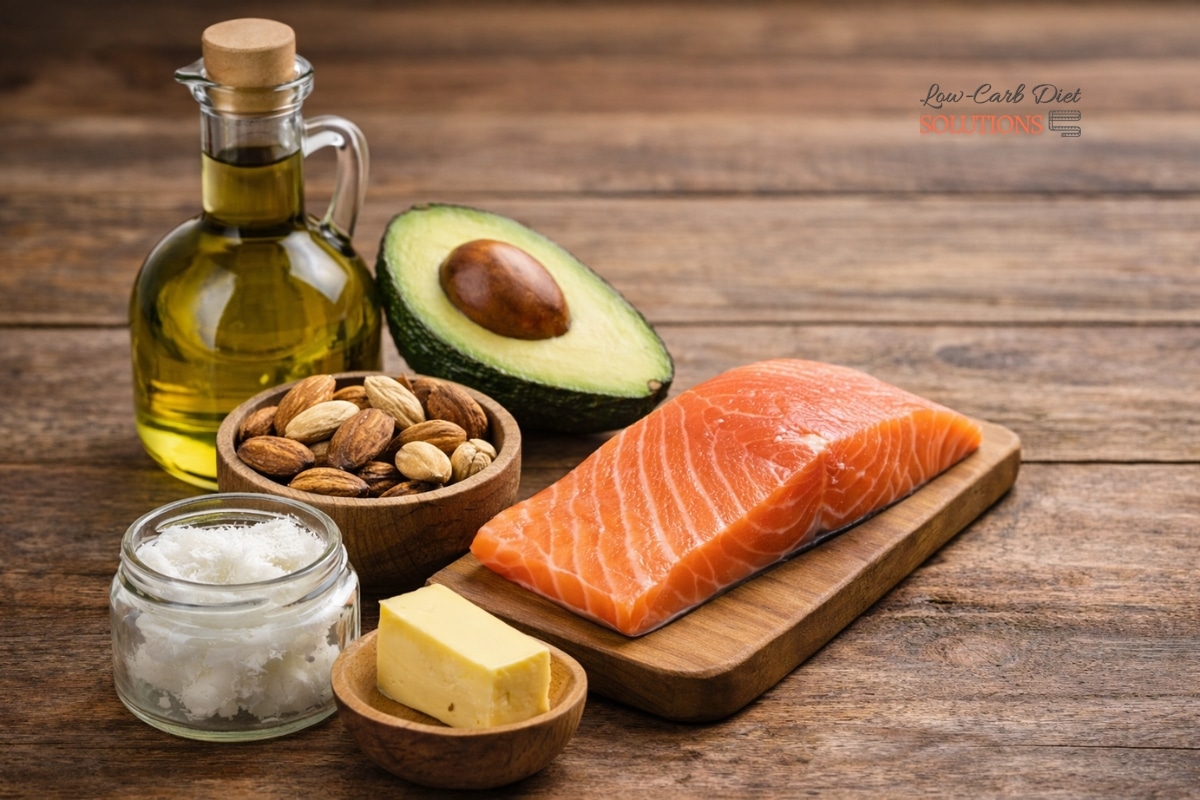
Fats often get a bad reputation because many processed foods contain unhealthy fats combined with sugar and refined carbohydrates. In reality, many foods provide healthy fats for low-carb diets and support the body’s natural energy needs. When following a low-carb lifestyle, choosing the right fats matters far more than simply avoiding fat altogether.
Why Fat Quality Matters on a Low-Carb Diet
For many years, dietary fat has been blamed for weight gain and poor health. Much of this belief developed during decades when low-fat diets were heavily promoted. Unfortunately, many of the foods marketed as “low-fat” were highly processed and loaded with sugar, refined carbohydrates, and artificial ingredients. As a result, fats gained a negative reputation that still influences how people think about nutrition today.
In reality, fat itself is not the problem. The real issue is the type of fat being consumed. Natural fats found in whole foods behave very differently in the body than industrially processed fats used in many packaged products.
Why Fats Developed a Negative Reputation
Several factors contributed to the misunderstanding surrounding dietary fat:
- Early nutrition guidelines focused heavily on reducing fat intake.
- Many processed foods replaced fat with sugar and refined carbohydrates.
- Fast food and ultra-processed snacks often combine unhealthy fats with high levels of sugar and salt.
- The idea that “eating fat makes you fat” became widely accepted.
These factors created confusion and led many people to avoid foods that actually contain beneficial nutrients.
The Difference Between Natural Fats and Processed Fats
Not all fats are created equal. The body responds very differently to natural fats compared with heavily processed ones.
Natural fats typically come from whole foods and undergo minimal processing. Examples include:
- Avocados
- Olive oil
- Coconut oil
- Nuts and seeds
- Fatty fish
- Grass-fed dairy products
Processed fats, on the other hand, are often chemically altered during manufacturing. These fats are commonly found in:
- Margarine and hydrogenated spreads
- Packaged baked goods
- Fast food meals
- Ultra-processed snack foods
Choosing healthy fats for low-carb diet plans means prioritising natural fat sources while limiting industrial oils and processed products.
Why Fat Becomes an Important Energy Source When Carbohydrates Are Reduced
When carbohydrate intake is reduced, the body naturally begins to rely more on fat as a source of fuel. Instead of depending on quick-burning carbohydrates, the body can convert dietary fat into energy.
This shift can provide several benefits:
- More stable energy levels throughout the day
- Reduced blood sugar spikes and crashes
- Increased feelings of fullness after meals
- Better support for sustained weight management
Because fat becomes a major energy source in a low-carb lifestyle, choosing the right types of fat becomes especially important.
Why Quality Matters More Than Quantity
In a low-carb lifestyle, the focus should not simply be on eating more fat. Instead, the goal is to select high-quality fats that support overall health.
Key principles include:
- Prioritise natural, minimally processed fat sources
- Avoid industrial trans fats and heavily refined oils
- Choose whole foods instead of packaged products
- Balance fat intake with nutrient-rich foods such as vegetables and quality protein
By focusing on healthy fats for low-carb diet strategies, it becomes easier to build a sustainable way of eating that supports both metabolic health and long-term well-being.
Healthy Fats for a Low-Carb Diet
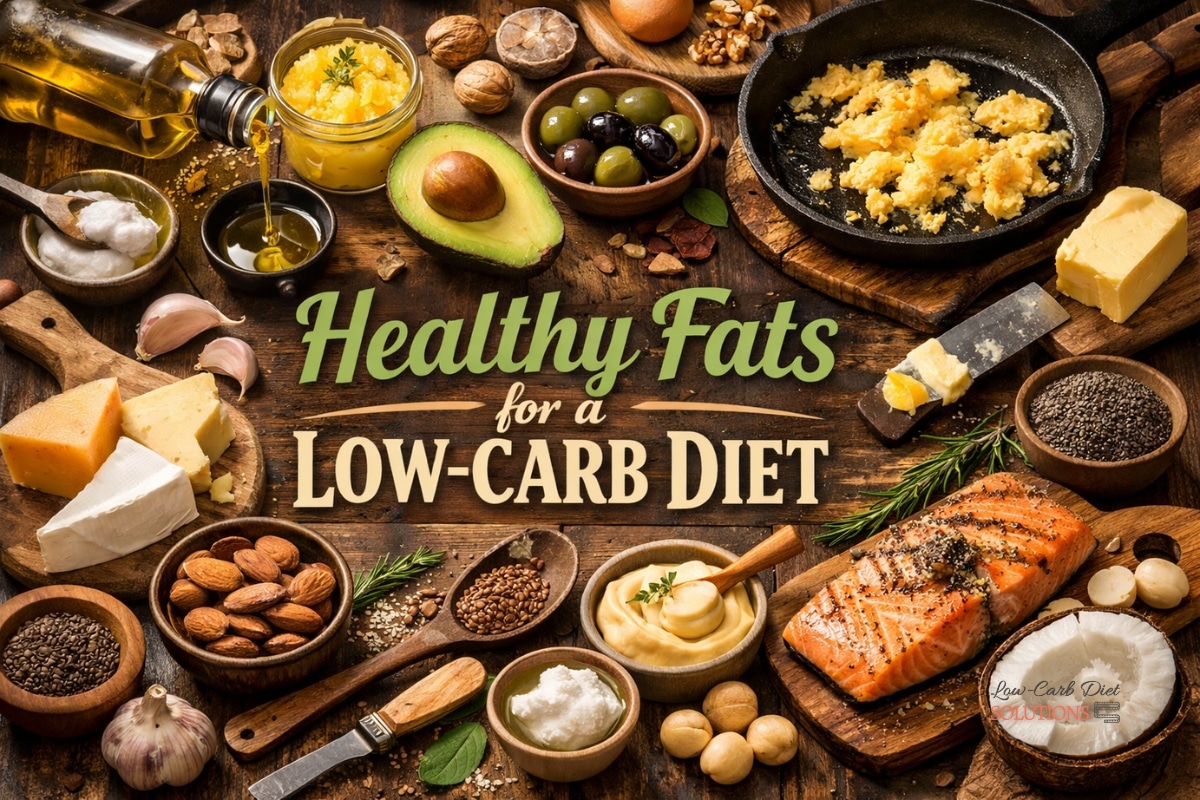
When carbohydrates are reduced, fat becomes one of the body’s primary sources of energy. This is why choosing the right fats is so important in a low-carb lifestyle. Including healthy fats for low-carb diet plans helps provide steady energy, supports nutrient absorption, and contributes to long-lasting satiety after meals.
Rather than avoiding fat altogether, the goal is to focus on natural fats found in whole foods. These fats provide important nutrients and support many essential functions in the body.
Saturated Fats
Saturated fats are often misunderstood, but they play several important roles in the body. These fats support hormone production, help maintain healthy cell membranes, and assist with the absorption of fat-soluble vitamins.
On a low-carb diet, saturated fats can also serve as a reliable energy source when carbohydrate intake is reduced.
Common sources of saturated fats include:
- Coconut oil
- Butter
- Ghee
- Raw dairy products
- Fatty cuts of meat
These foods provide natural sources of fat that fit well within many healthy fats for a low-carb diet.
Monounsaturated Fats
Monounsaturated fats are widely known for their benefits to heart health. They may help improve cholesterol balance by supporting healthy HDL levels and reducing LDL cholesterol.
These fats are also associated with improved insulin sensitivity and may support metabolic health in people following a low-carb lifestyle.
Good sources of monounsaturated fats include:
- Olive oil
- Avocados
- Almonds
- Cashews
- Peanuts
- Sesame seeds
Because these foods are minimally processed and nutrient-rich, they are commonly recommended in healthy fats for low-carb diet strategies.
Polyunsaturated Fats
Polyunsaturated fats include essential fatty acids that the body cannot produce on its own. Two important types are omega-3 and omega-6 fatty acids.
Omega-3 fats are particularly valuable because they help support heart health, reduce inflammation, and contribute to normal brain function.
Natural sources of polyunsaturated fats include:
- Salmon
- Herring
- Tuna
- Walnuts
- Chia seeds
- Flaxseed oil
Including these foods helps provide essential nutrients while supporting the balance of fats needed in a well-structured low-carb eating plan.
Fats to Avoid on a Low-Carb Diet
Just as important as including healthy fats for low-carb diet plans is knowing which fats to avoid. Many modern foods contain fats that have been heavily processed or chemically altered during manufacturing. These fats are commonly found in packaged products and fast food and can negatively affect metabolic health.
Limiting these unhealthy fats helps support the benefits of a low-carb lifestyle and makes it easier to focus on natural, nutrient-rich foods.
Industrial Trans Fats
Industrial trans fats are created through a chemical process called hydrogenation. This process changes the structure of natural oils, making them solid at room temperature and extending their shelf life. Unfortunately, these fats are strongly associated with increased health risks.
Industrial trans fats are often found in:
- Margarine and hydrogenated spreads
- Packaged baked goods such as cookies and pastries
- Commercial snack foods
- Fast food products
Because of their negative effects on heart health, these fats are widely recognised as among the least healthy in the modern diet.
Highly Processed Vegetable Oils
Many vegetable oils used in processed foods undergo extensive refining and high-heat processing, which can damage them and reduce their nutritional quality.
Common examples include:
- Soybean oil
- Corn oil
- Cottonseed oil
- Canola oil used in processed foods
These oils are frequently used in restaurant frying, packaged snacks, and processed meals. Limiting them can help support a diet that focuses more on natural fat sources.
Ultra-Processed Foods
Ultra-processed foods often contain a combination of unhealthy fats, refined carbohydrates, and artificial ingredients. Even when the label suggests a product is low-carb, it may still contain poor-quality fats.
Examples of foods to limit include:
- Fast food meals
- Packaged snack foods
- Commercial baked goods
- Ready-made frozen meals
Avoiding these products makes it easier to prioritise whole foods and include more healthy fats for low-carb diet choices that support long-term health and sustainable eating habits.
Best Fats for Cooking on a Low-Carb Diet
When following a low-carb lifestyle, cooking with the right fats is just as important as choosing the right foods. Some fats remain stable at high temperatures, while others break down and lose their nutritional value when exposed to heat. Selecting the proper fats helps preserve nutrients and supports the benefits of including healthy fats for low-carb diet plans.
Different fats are better suited for different types of cooking.
Fats Suitable for High-Heat Cooking
Some fats remain stable when exposed to higher temperatures. These fats are less likely to break down or oxidise during cooking.
Good choices include:
- Coconut oil
- Butter
- Ghee
- Beef tallow
- Lard from naturally raised animals
These fats work well for cooking methods such as:
- Frying
- Sautéing
- Roasting
- Pan cooking
Because they remain relatively stable under heat, they are commonly recommended for preparing meals in a low-carb kitchen.
Fats Best Used Without High Heat
Other fats are more delicate and are better used without intense heat. These oils still provide valuable nutrients but are best added after cooking.
Examples include:
- Olive oil
- Flaxseed oil
- Walnut oil
- Avocado oil for light cooking
These oils are ideal for:
- Salad dressings
- Drizzling over cooked vegetables
- Finishing dishes after cooking
Why Cooking Fat Choice Matters
Using the right cooking fats helps maintain both flavour and nutritional quality. When fats break down at high temperatures, they can lose beneficial compounds and produce unwanted by-products.
Choosing stable fats and focusing on natural food sources makes it easier to incorporate healthy fats for low-carb diet strategies while preparing meals safely and effectively.
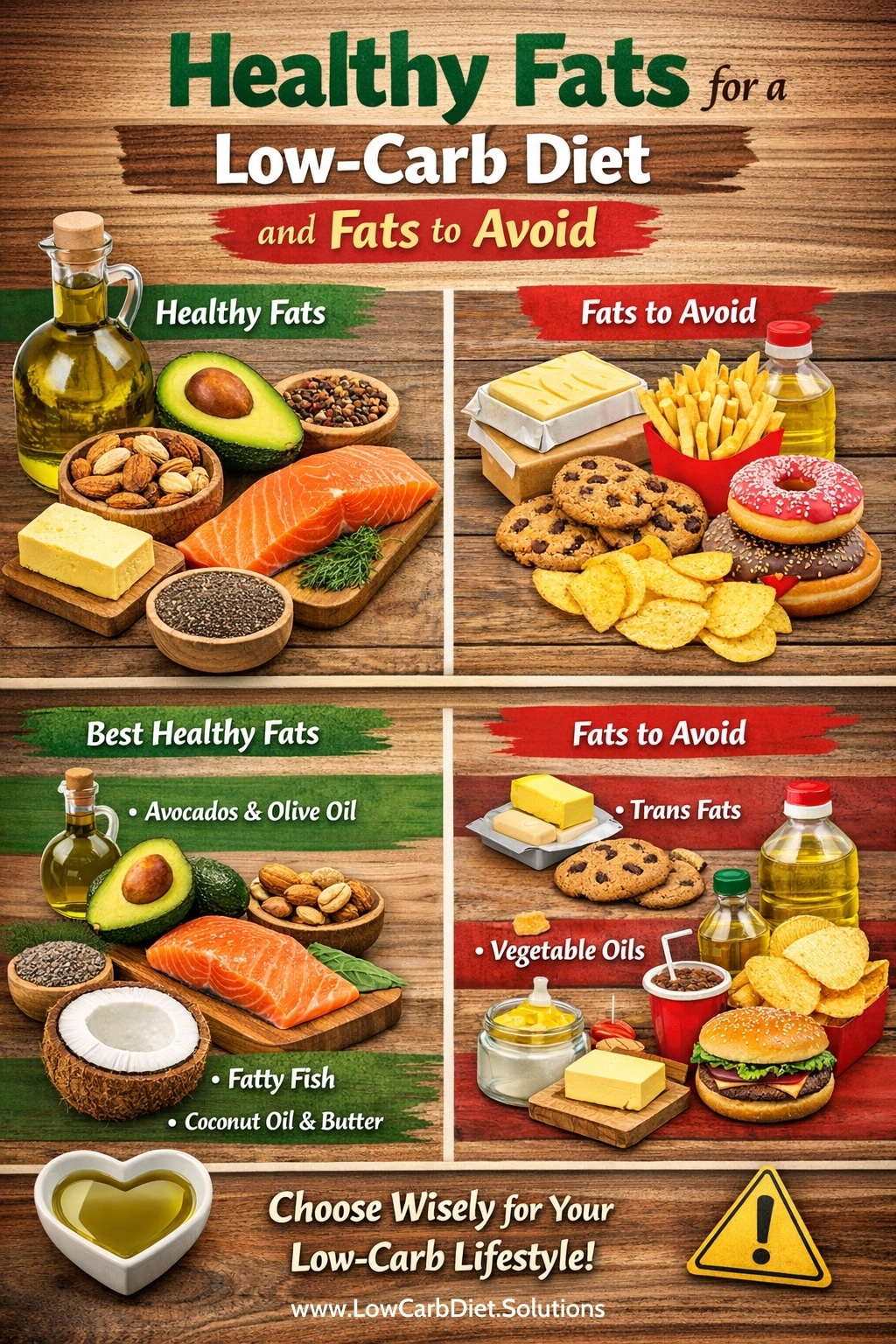
Choosing Healthy Fats for a Low-Carb Diet and Fats to Avoid
Choosing the right fats is one of the most important steps when building a sustainable low-carb lifestyle. Instead of fearing fat, the focus should be on selecting natural, minimally processed foods that support long-term health and stable energy levels.
Many whole foods provide healthy fats for low-carb diet plans, including avocados, olive oil, nuts, seeds, and fatty fish. These foods supply essential nutrients and help the body stay satisfied between meals.
At the same time, it is equally important to recognise the fats to avoid. Industrial trans fats, heavily processed vegetable oils, and ultra-processed foods often contain ingredients that can undermine metabolic health and weight management.
By focusing on natural food sources and limiting processed products, it becomes much easier to maintain a balanced and sustainable low-carb way of eating.


0 Comments