
Have you ever reached for chocolate after a stressful day, found yourself snacking late at night even though you were not truly hungry, or felt frustrated after breaking your diet again?
These moments can seem harmless in isolation, yet they often point to a deeper pattern. Emotional eating happens when food becomes a response to stress, disappointment, boredom, or overwhelm rather than to physical hunger. Recognising this pattern is an important first step because it helps you see that the problem is not simply a lack of willpower. It is a cycle that can be understood and changed.

Why Emotional Eating Feels Impossible to Control
Emotional eating can feel impossible to control because stress can change eating patterns and increase the appeal of hyperpalatable foods, especially those high in sugar and fat. A review published in Minerva Endocrinologica and available on PubMed Central explains that stress affects both eating behaviour and reward pathways, which helps explain why comfort foods can feel so hard to resist.
The problem is that this comfort does not last. Once the moment passes, the original emotion remains. Instead of solving the stress, the habit reinforces it. You may then feel disappointed in yourself for overeating or for breaking your diet, which creates even more emotional discomfort. That discomfort can then lead to another craving, and the cycle starts again.
Over time, the brain begins to connect difficult emotions with food. Stress may trigger chocolate. Loneliness may trigger late-night snacking. Frustration may trigger a strong desire for bread, biscuits, or other comforting foods. The more often this happens, the more automatic the habit becomes.
This is why emotional eating is not simply about hunger. It is about learning to use food as a response to feelings. Once you understand that emotions are driving the habit, it becomes easier to see why cravings can feel so strong and so hard to resist.
What Emotional Eating Really Means
Emotional eating means using food to cope with feelings rather than to satisfy physical hunger. It often happens in response to stress, sadness, boredom, loneliness, frustration, or even exhaustion. Instead of eating because your body needs fuel, you eat because food seems to offer comfort, distraction, or relief.
This is why emotional eating can feel confusing. You may think you are simply hungry, yet the urge to eat can come on suddenly and seem tied to a mood or situation. The craving is often specific too. Rather than wanting a proper meal, you may find yourself wanting chocolate, crisps, biscuits, ice cream, or other foods that feel soothing in the moment.
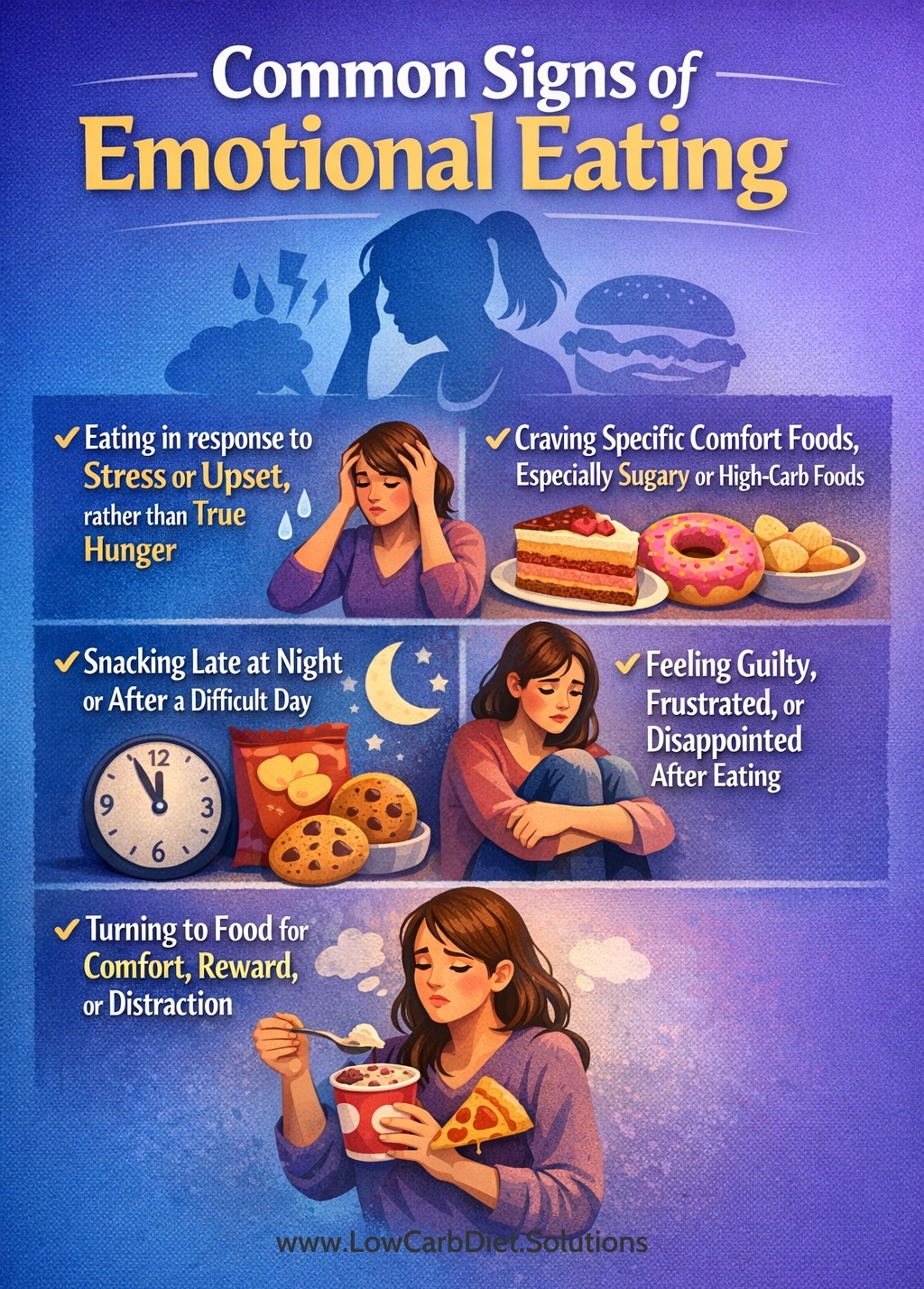
Common signs of emotional eating
- Eating in response to stress or upset rather than true hunger
- Craving specific comfort foods, especially sugary or high-carb foods
- Snacking late at night or after a difficult day
- Feeling guilty, frustrated, or disappointed after eating
- Turning to food for comfort, reward, or distraction
The difference between emotional hunger and physical hunger
Physical hunger usually develops gradually. You may notice a gentle feeling of emptiness, low energy, or the natural signs that it is time to eat. Emotional hunger is different. It tends to appear suddenly and feels urgent. Instead of being open to a variety of foods, emotional hunger often fixates on a single comfort food, making you feel you need it right away.
Another difference is what happens after eating. Physical hunger eases once you have had enough food. Emotional hunger often lingers even after you are full because the real need was not for nourishment in the first place. This is why emotional eating can leave you feeling uncomfortable, disappointed, or guilty rather than satisfied.
Why emotional eating targets sugar and carbs
Emotional eating often targets sugar and carbohydrate-rich foods because they are closely linked with comfort, reward, and quick pleasure. Sweet foods, baked treats, crisps, bread, and other familiar comfort foods can feel soothing in stressful moments because they are easy to eat and strongly tied to habit and emotion.
These foods also provide quick sensory satisfaction, making them especially appealing when you feel overwhelmed or upset. The relief may only last a short time, but the brain begins to remember that these foods seemed to help in difficult moments. Over time, that association can become stronger, which is why emotional eating so often involves cravings for sugar and carbs rather than healthier foods or a balanced meal.
Are You Prone to Emotional Eating?
Emotional eating is not always obvious at first. Many people assume they simply lack willpower or have a habit of overeating. In reality, emotional eating often follows a pattern. Certain feelings can trigger the urge to eat, even when the body is not truly hungry. If some of these situations sound familiar, emotional eating may be playing a bigger role than you realise.
Eating when you feel stressed
Stress is one of the most common triggers for emotional eating. After a difficult day, food can seem like the fastest way to calm down or feel better. Sweet foods, bread, crisps, and other comforting snacks often become especially tempting when life feels overwhelming.
You may be prone to emotional eating if you notice that stress leads you straight to the kitchen, even when you recently ate. In these moments, food is being used to manage tension rather than to satisfy physical hunger.
Eating when you feel bored or lonely
Emotional eating is not always tied to dramatic feelings. Sometimes it appears during quiet moments, especially when you feel bored, restless, or alone. Food can become a way to fill time, create comfort, or distract you from uncomfortable emotions.
This is why boredom eating can be so easy to miss. You may not feel upset in an obvious way, yet you still find yourself looking for snacks out of habit. When eating becomes a response to emptiness rather than hunger, it may be a sign of emotional eating.
Cravings that appear suddenly
Physical hunger usually builds gradually. Emotional cravings often arrive quickly and feel urgent. Instead of being open to different foods, you may suddenly want something very specific, such as chocolate, bread, ice cream, or another comfort food.
Common signs include:
- craving a particular food rather than a proper meal
- feeling a strong urge to eat right away
- wanting sugar or refined carbs for quick comfort
- thinking about food even though you are not physically hungry
Sudden cravings like these often suggest that the body is seeking emotional relief rather than nourishment.
Feeling guilty after eating
One of the clearest signs of emotional eating is what happens afterwards. Physical hunger usually ends with a sense of satisfaction. Emotional eating often leaves behind frustration, regret, or guilt because the real problem was never hunger in the first place.
If you often feel disappointed in yourself after eating, it may be worth looking at what triggered the urge. The guilt does not mean you have failed. It may simply be a sign that food has become linked with emotional comfort, and that this pattern needs understanding
The Most Common Triggers of Emotional Eating
Emotional eating does not happen without a reason. It is usually triggered by a feeling, a habit, or a situation that makes food seem comforting in the moment. While the trigger may feel different for each person, the result is often the same. You reach for something sweet, starchy, or familiar, not because your body truly needs fuel, but because food appears to offer relief, comfort, or reward.
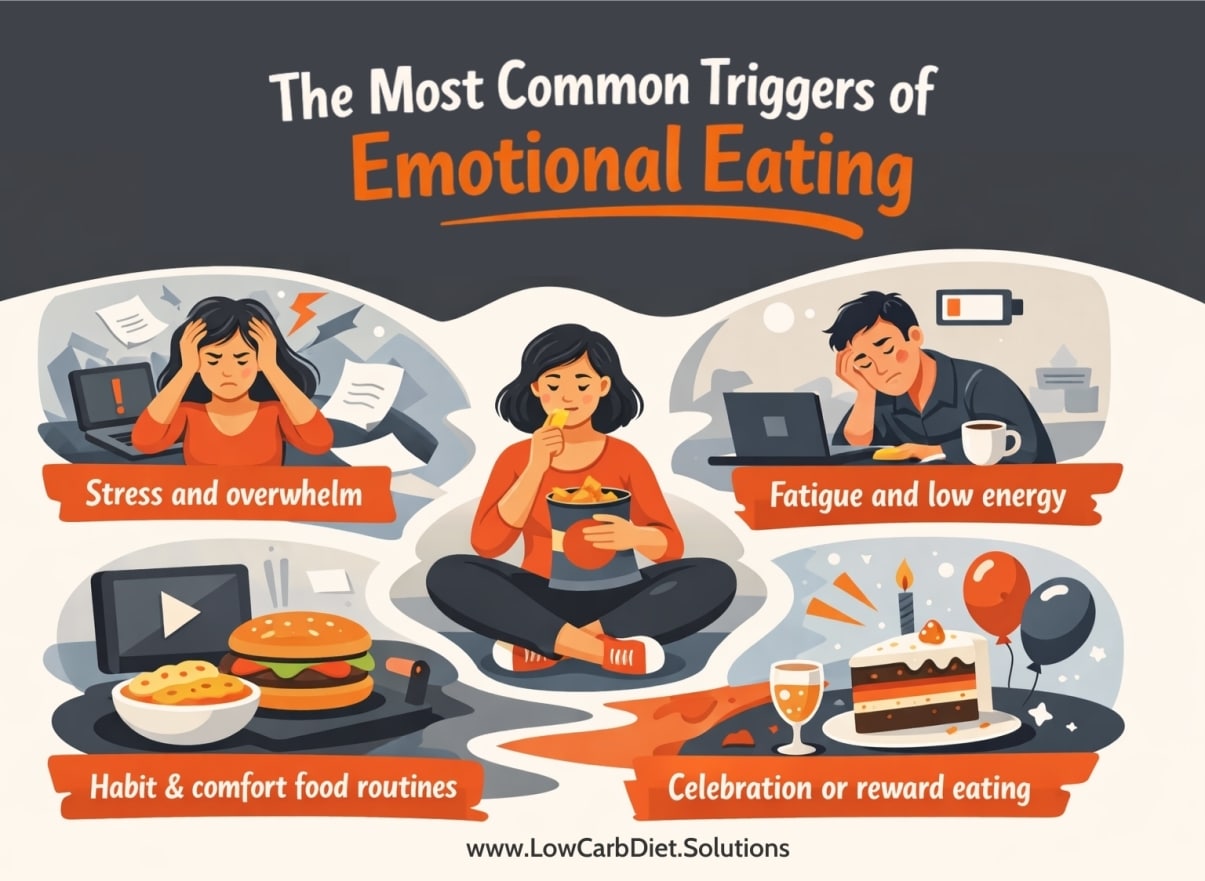
Stress and overwhelm
Stress is one of the most common reasons people turn to food. A difficult day, pressure at work, family worries, or too many responsibilities at once can all create the urge to eat. In these moments, food may feel like a quick way to calm down or escape the pressure for a short while.
This is why emotional eating often appears after an overwhelming day. The body is tired, the mind is overloaded, and comfort food seems like an easy answer. Unfortunately, the relief is usually temporary, which makes the pattern easy to repeat.
Fatigue and low energy
When you feel exhausted, your body and mind naturally look for something that seems quick and easy. Sugary foods and refined carbohydrates often become appealing because they promise a fast lift in energy and mood. This can make tiredness a powerful trigger for emotional eating.
Common signs include:
- craving sugar or carbs when you feel drained
- snacking in the afternoon or late at night for a boost
- confusing tiredness with hunger
- eating for comfort when rest is what you really need
Fatigue can be especially deceptive because it feels physical. Yet many times the real need is sleep, rest, or a break rather than food.
Habit and comfort food routines
Sometimes, emotional eating is less about a strong feeling and more about routine. You may always eat something sweet after dinner, snack while watching television, or reach for bread or biscuits at a certain time of day. These habits can become so familiar that they feel automatic.
Comfort food routines are powerful because they connect eating with a sense of safety and familiarity. Even when you are not hungry, the pattern itself can trigger the craving. Over time, the habit becomes part of how you respond to certain moments.
Celebration or reward eating
Not all emotional eating comes from negative feelings. Sometimes food becomes a reward. You may tell yourself that you deserve a treat after a hard day, a busy week, or an achievement. Celebrations can also encourage overeating because food is linked with pleasure, relaxation, and enjoyment.
This does not mean celebration is wrong. The problem begins when food becomes the main way you reward yourself or mark success. When that happens often, the habit can strengthen the emotional connection to eating and make cravings more frequent.
Examples of Emotional Eating in Everyday Life
Emotional eating often feels normal because it can easily blend into everyday routines. Many people do not realise it is happening because the behaviour seems small, familiar, or easy to justify. Yet when food becomes the answer to stress, tiredness, boredom, or the need for comfort, it may be emotional eating rather than true hunger.
Stress eating after work
One of the most common examples of emotional eating happens at the end of a long day. After dealing with pressure, frustration, or mental exhaustion, it can feel natural to reach for chocolate, crisps, takeaway, or another comforting food. In that moment, eating may seem like a way to unwind and leave the stress behind.
The problem is that this kind of eating is usually driven by emotion rather than physical hunger. The food may bring relief for a short while, but it does not remove the stress itself. This is why the pattern can become easy to repeat after difficult days.
Late-night snacking
Late-night snacking is another common form of emotional eating. Many people find themselves searching for something sweet or salty in the evening, even after they have already eaten dinner. Sometimes this happens because the day is finally quiet and food becomes a source of comfort, distraction, or relaxation.
Common signs of late-night emotional eating include:
- eating even though you are not physically hungry
- craving specific comfort foods rather than a proper meal
- snacking while watching television or scrolling on your phone
- eating to relax, switch off, or cope with loneliness
These moments can feel harmless, yet they often reveal a deeper habit of using food to manage emotions at the end of the day.
Rewarding yourself with food
Emotional eating is not always linked to negative feelings. It can also happen when food becomes a reward. You may promise yourself a dessert after getting through a busy day, buy a treat after finishing a task, or celebrate success with sugary or high-carb foods.
This kind of eating can seem positive, but it still strengthens the link between food and emotion. Over time, the brain begins to expect food as a reward, which can make cravings appear even when the body does not need nourishment. When this happens regularly, eating becomes tied not just to hunger, but also to comfort, celebration, and self-soothing.
How Emotional Eating Sabotages Weight Loss
Emotional eating can quietly undermine weight loss because it shifts eating away from genuine physical hunger and towards feelings, habits, and cravings. Even when you are trying hard to follow a healthy plan, emotional triggers can lead to extra eating that feels difficult to control. This often creates frustration because the problem is not simply what you eat, but why you are eating in the first place.
Why cravings intensify
Cravings often become stronger when emotional eating is involved. Stress, tiredness, boredom, and frustration can all make comfort foods seem far more appealing than usual. Instead of wanting a balanced meal, you may find yourself fixated on chocolate, bread, crisps, biscuits, or other sugary and high-carb foods.
This can sabotage weight loss in several ways:
- Cravings tend to feel urgent and hard to ignore
- Comfort foods are often easy to overeat
- Emotional eating can happen on top of regular meals
- Frustration after overeating can trigger even more cravings
The more often food is used for emotional relief, the more automatic those cravings can become. Over time, it may feel as though your appetite is working against you, when in reality, your emotions are driving the urge to eat.
How sugar keeps the cycle going
Sugar can make emotional eating even harder to break because it strengthens the cycle of craving and reward. Sweet foods often provide quick comfort and a temporary mood lift, making them especially attractive during stressful or upsetting moments. The relief may be brief, but it is enough to teach the brain to look for the same solution again next time.
This is why sugar can keep the cycle going so easily. A stressful moment triggers the craving. Sugar offers short-term comfort. Afterwards, guilt, disappointment, or another energy slump may follow, triggering the next urge to eat.
When this pattern repeats, weight loss becomes more difficult because the body is not simply responding to hunger. It is responding to emotional habits that keep pulling you back towards the foods you are trying to avoid.
How to Break the Emotional Eating Cycle
Breaking the emotional eating cycle begins with awareness. Once you understand that food is being used to respond to feelings rather than true hunger, you can start to interrupt the pattern. This does not happen through guilt or harsh self-control. It happens by recognising what is driving the urge to eat and learning new ways to respond.
Recognising emotional hunger
The first step is to notice the difference between emotional hunger and physical hunger. Emotional hunger often appears suddenly and feels urgent. It usually focuses on a particular comfort food, especially something sweet or high in carbohydrates. Physical hunger tends to build more gradually and can be satisfied with a range of foods.
Signs of emotional hunger often include:
- wanting food very suddenly
- craving a specific comfort food
- eating even though you recently had a meal
- continuing to eat after you are full
- feeling guilt or regret afterwards
The more clearly you can spot these signs, the easier it becomes to pause before acting on the craving.
Identifying triggers
Emotional eating rarely happens without a trigger. The urge to eat may follow stress, boredom, loneliness, tiredness, frustration, or even a familiar daily routine. Many people discover that the same situations lead to the same cravings over and over again.
It can help to ask yourself a few simple questions before eating:
Am I physically hungry, or am I trying to soothe a feeling?
What happened just before this craving started?
Am I stressed, tired, upset, bored, or looking for comfort?
Do I want food, or do I need something else?
These small pauses can reveal patterns that are easy to miss when eating feels automatic.
Replacing food with healthier coping habits
Once you identify the trigger, the next step is to find another way to respond. Food may have become a habit for comfort, but it is not the only way to deal with emotion. Healthier coping habits can help reduce the urge to eat when the body is not truly hungry.
Helpful alternatives may include:
- going for a short walk
- drinking water or making a cup of tea
- calling or messaging someone
- writing down what you are feeling
- taking a few slow breaths and waiting ten minutes
- resting if you are tired rather than reaching for sugar
The goal is not perfection. It is learning to pause, understand the feeling, and give yourself a response that truly helps. Over time, these small changes can weaken the connection between emotion and eating, making the cycle easier to break.
Understanding Emotional Eating Is the First Step
Emotional eating can feel frustrating, discouraging, and deeply ingrained, but it is not a pattern you are powerless to change. Once you understand that the urge to eat is often linked to feelings rather than true hunger, you can begin to respond differently. Awareness is where progress starts. The more clearly you recognise your triggers, habits, and cravings, the easier it becomes to break the cycle and move towards lasting change.
Further Reading on Emotional Eating
If you would like to understand this topic in more depth, these related articles can help you explore the causes of emotional eating, recognise hidden patterns, and find practical ways to regain control.
- Cure Your Cravings Related to Emotional Eating
Learn how emotional triggers can lead to cravings and why reducing stress can help break the pattern.


0 Comments