
Is emotional eating a problem for you? A challenge that you likely face as someone who is trying to lose weight could be saying no to sugar and carb cravings. One reason why this becomes a hopeless repeat cycle is that the more we give in to our sugar cravings, the more we want sugar. If you're ready to break free and kick the sugar habit, it might be time to make a conscious decision to change the way you respond to those cravings and break the cycle of emotional eating.

Why Does Sugar Lead to Sugar Addiction?
Processed sugar is a highly addictive substance. In fact, any sweet product, even if the sugar is fructose, which originates from fruit, is likely to contribute to sugar addiction. The reason is that there is no fiber. When we ingest foods that contain sugar, our body process without the presence of fiber. Consequently, the substance enters our bloodstream and begins to affect our brain activity.
This is quite different from eating a piece of fruit, such as an apple. An apple contains fibre in the form of the apple flesh and skin. As a result, the fibre slows digestion. Slowing digestion helps the organs, such as the liver, pancreas, and kidneys, ease their work in breaking down the substance.
One thing to notice about sugar and the high it brings is the crash that follows. This inevitably leads our bodies to crave that sugar rush again. Without it, we are likely to experience not just a dip in energy levels but also accompanying mood swings. When you feel unexplained irritability and foul temper, you may blame the lack of sugar.
Unless you are already a serial label reader, you are probably only now just becoming aware that sugar and refined flour are hidden in most prepared foods. Technically, you do not have to be a sweet eater or a “junk food junkie.” If you regularly eat boxed and prepared foods, you are likely ingesting a large amount of sugar. Recognising these hidden sources is an important step if you want to kick the sugar habit and regain control over cravings.
Why Emotional Eating Often Shows Up as Carb Cravings
Many people assume emotional eating means reaching for sweets. In reality, emotional eating often shows up as cravings for refined carbohydrates such as bread, pasta, crackers, or baked goods. These foods break down quickly into glucose, causing a rapid rise in blood sugar. The brain responds by releasing feel-good neurotransmitters that temporarily reduce stress or emotional discomfort.
Because this effect happens quickly, the brain begins to associate refined carbohydrates with emotional relief. Over time, this creates a learned pattern. Stress, boredom, frustration, or fatigue can trigger a sudden desire for bread or other carb-heavy foods. Even people who rarely eat desserts may still experience strong cravings for these comforting carbohydrates.
If you want to break the cycle of emotional eating, understanding this connection is an important step. When cravings appear, they are not always a signal of physical hunger. Often, they signal that the body is seeking a quick emotional reset. And a small homemade dessert like this low-carb raspberry & blackberry cobbler can satisfy cravings without triggering sugar spikes.
How Bread and Refined Carbs Make It Hard to Kick the Sugar Habit
Bread and other refined carbohydrates can play a powerful role in reinforcing the emotional eating cycle. Foods made from refined flour are digested very quickly in the body. This rapid digestion causes blood sugar levels to rise fast, followed by an equally quick drop. That sudden fall in blood sugar often leads to fatigue, irritability, and a renewed desire for more carbohydrates.
Because bread and similar foods provide quick comfort, they are often linked with emotional relief. A stressful day, a moment of boredom, or feelings of frustration can easily lead to reaching for a slice of bread, toast, or a sandwich. The temporary boost in energy and mood can feel satisfying in the moment, but it rarely lasts long.
Over time, this pattern teaches the brain to seek refined carbohydrates whenever emotional discomfort arises. Instead of addressing the underlying feeling, the body starts expecting another quick carbohydrate fix. Recognising how refined carbs reinforce this cycle can help you become more aware of the triggers behind emotional eating and take steps to kick the sugar habit.
Learning to Recognise Emotional Hunger vs Physical Hunger
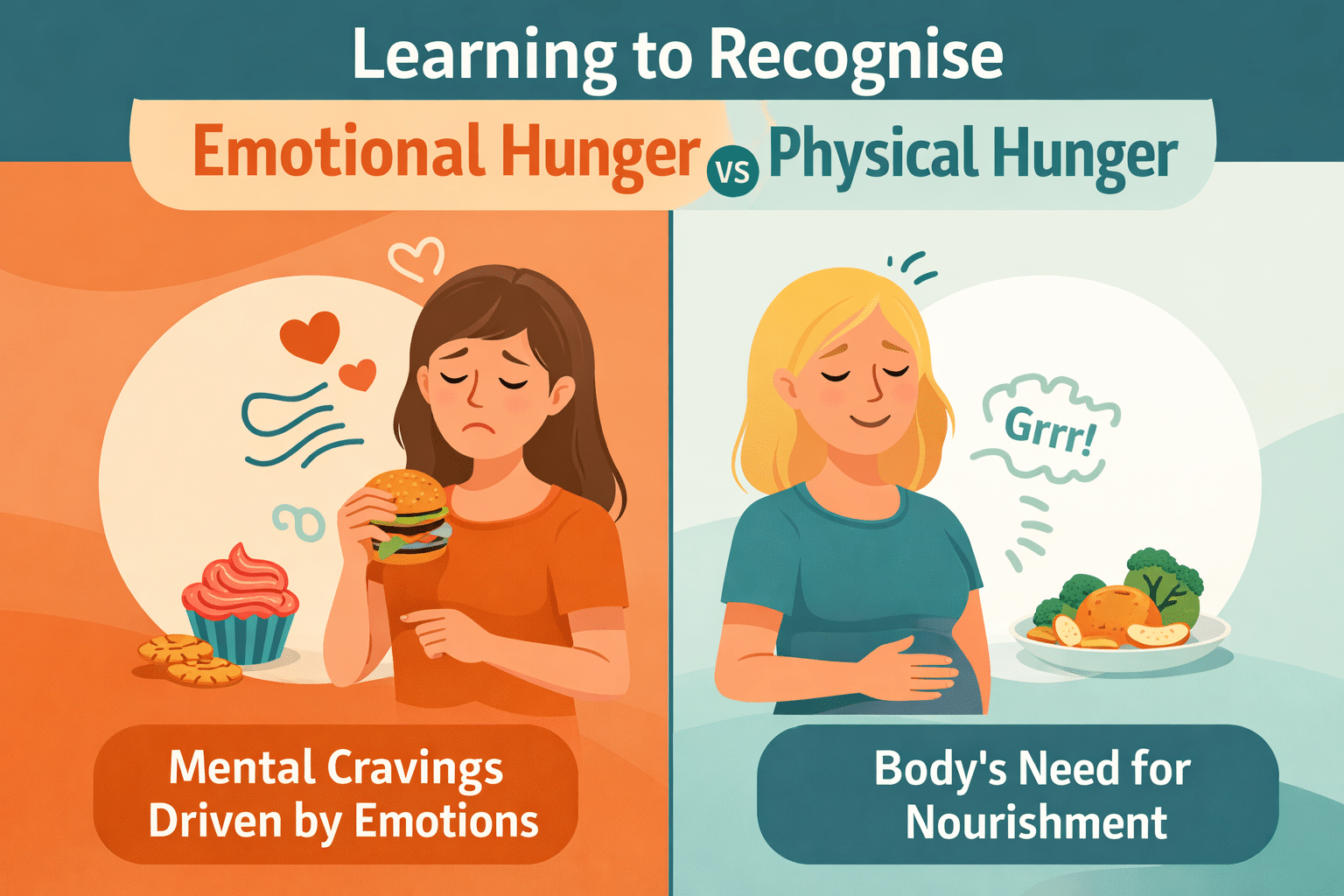
Learning to recognise the difference between emotional hunger and physical hunger is an important step if you want to break the cycle of emotional eating. Physical hunger develops gradually and is the body’s natural signal that it needs nourishment. It usually appears several hours after the last meal and can be satisfied with a variety of foods.
Emotional hunger tends to appear suddenly and often feels very specific. Instead of feeling open to different foods, a person may crave a particular item such as bread, pasta, or another comforting carbohydrate. Emotional hunger is often associated with feelings such as stress, boredom, frustration, or fatigue rather than with a true need for energy.
Another key difference is what happens after eating. When physical hunger is satisfied, the body feels nourished and content. Emotional hunger, however, often leaves a person feeling unsatisfied or even guilty because the underlying emotion has not been addressed. Learning to pause and ask whether the body truly needs food or simply relief from an emotion can help interrupt the automatic reach for comfort foods.
Undo Sugar Addiction to Break The Cycle of Emotional Eating
The first step to breaking the cycle of emotional eating is to take a close look at the foods you eat regularly. Many people underestimate how much hidden sugar and refined carbohydrates are present in everyday products. A thorough assessment of your routine foods can reveal just how often sugar quietly enters your diet.
Sugar frequently hides in so-called health foods such as granola bars, whole grain cereals, muffins, and breakfast bars. Large amounts can also be found in common condiments like ketchup and salad dressing. Powdered soups, gravies, and many pre-made boxed foods, such as seasoned rice, pasta mixes, dips, and spreads, are also surprisingly high in carbohydrates and sugar.
One of the most effective strategies is to move away from processed convenience foods and return to whole foods. Instead of pouring bottled dressing on your salad, try making a simple one yourself using olive oil, vinegar, plain yogurt, and natural spices. In place of packaged soups, simmer nourishing broths made from chicken or beef bones.
Not only are these options free from hidden sugars, but bone broth also provides valuable nutrients that support overall health. Small changes like these help restore balance in your diet and make it easier to kick the sugar habit.


0 Comments